 Kimi K3
Review prompt template
Goal: review this change plan. Context: affected modules, constraints and expected behavior. Please find missing tests, edge cases, rollout risk and the smallest check command set.
Kimi K3 Feature
Use Kimi K3 Code as a review and planning surface for engineering work, not as a vague autocomplete promise.
This page explains the developer workflows that benefit from context, constraints and quality checks.
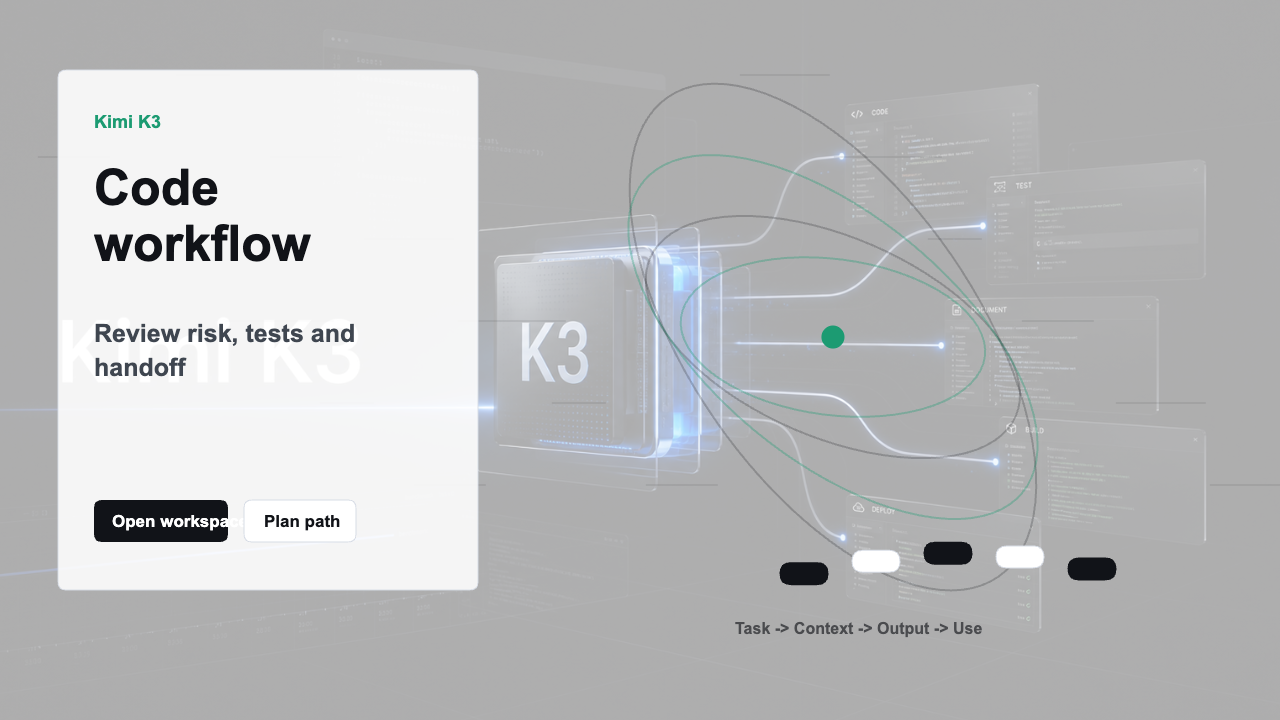
Workflow preview
Use the preview as a quick orientation, then continue into the direct answer, checklist and related pages for the concrete steps.
Use Kimi K3 Code as a review and planning surface for engineering work, not as a vague autocomplete promise. This page explains the developer workflows that benefit from context, constraints and quality checks.
Kimi K3 code is handled on this single page so visitors can get a focused answer, inspect the practical limits, and continue to the right Kimi K3 workflow without bouncing between duplicate pages.
| Area | Practical answer |
|---|---|
| Best for | review, planning, debugging and handoff |
| Needs | goal, code context, constraints and expected checks |
| Avoid | invented repository details or unrun test claims |
| Next page | benchmarks or tools |
Kimi K3 Code should help developers get a useful answer on the first serious attempt. Paste enough context for the assistant to find risk, but keep the requested output narrow.
Review prompt template
Debug prompt template
| Review area | Ask Kimi K3 to check | Good answer includes |
|---|---|---|
| Behavior | Does the change satisfy the stated user path? | Concrete edge cases and acceptance checks |
| Tests | Which tests are missing or stale? | Targeted commands and fixtures |
| Integration | What can break across modules or routes? | Contract, migration and rollback notes |
| Handoff | What should the release note or reviewer summary say? | Plain-language explanation for teammates |
Use this guide with the live Kimi K3 workspace, the pricing page, and the implementation notes. The useful path is simple: understand the task, prepare the input, run a realistic prompt, inspect the result, and then decide whether the plan, deployment and access boundary match the work.
Kimi K3 is independent from official Kimi account systems. It uses an original interface, own-domain pricing and protected runtime routes. That independence should make the workflow easier to test, while the public pages keep the limits visible for visitors who need a clear decision.
For a better trial, bring real constraints. A good prompt includes the source material, the output format, the role of the reader, and one follow-up question. This lets the workspace prove whether it can preserve context and produce a result that is ready to use.
Use this checklist before you treat the page as a final answer. First, decide whether the visitor is comparing options, preparing a local test, estimating cost, checking a limitation, or choosing the next step inside the Kimi K3 workspace. Then match the page advice to one concrete input and one concrete output. That keeps the workflow practical instead of turning it into a general product description.
A useful reading path is to start with Code review and then compare it with Implementation planning. The first section frames the immediate question, while the second section usually reveals the operational constraint that affects cost, setup, reliability or evaluation. Read them together before you ask Kimi K3 for a draft, review, plan or comparison.
Use a simple acceptance test for this topic: can you explain the best for, needs, avoid, next page without opening another tab, and can you choose the next page confidently? If the answer is no, stay on this page and tighten the input example. If the answer is yes, move into the workspace with a short prompt, one source example and a clear output format.
Coding pages should speak to repository work: issue triage, diff review, migration notes, test planning, API documentation, release summaries and handoff comments. A useful Kimi K3 code workflow preserves constraints from the repo instead of returning a disconnected suggestion.
Helpful signals to check while reading: repository diff, issue triage, failing test, migration guide, API contract, release note, review comment, dependency change, refactor scope, fixture update, patch summary, developer handoff. These signals make the page easier to apply to a real Kimi K3 decision instead of a generic AI assistant comparison.
For follow-up reading, continue to Kimi K3 Benchmarks, Kimi K3 Tools, Kimi K3 Context Window, Kimi K3 API Cost Calculator. Those pages cover the adjacent cost, deployment, context, review, comparison or workflow questions that usually appear after this one. If the answer here changes your setup decision, review pricing and runtime notes before sending production work through protected model calls.
The safest way to use this page is to keep the question narrow, bring a real example, and write down the constraint that matters most: time, budget, context length, privacy, deployment effort, answer quality or handoff format. Kimi K3 pages are designed to be read as a connected decision path, so every page should help you choose the next action rather than simply repeat the brand name. Revisit this checklist whenever your input, team role or deployment plan changes, especially before a public launch or paid workflow review.
No. It can reason over code and context that the visitor provides in the workspace.
Include the goal, relevant files or snippets, constraints, error output and the checks you expect.
A useful answer names risks, tests, rollout steps and concrete next actions.